THE UGLY STEPSISTER (2O25) review
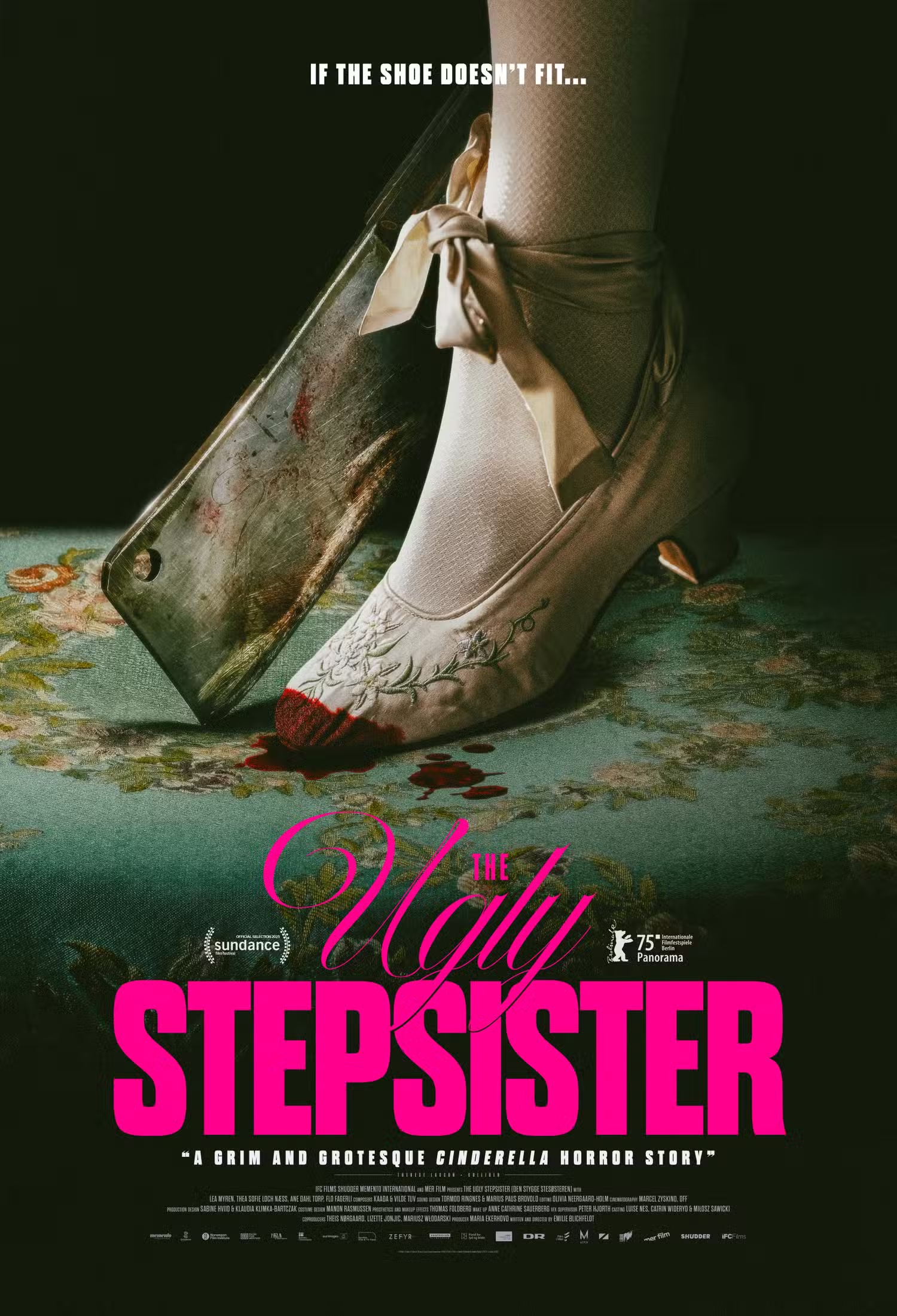
written by: Emilie Blichfeldt
produced by: Maria Ekerhovd, Axel Helgeland, Christian Torpe, and Jesper Morthorst
directed by: Emilie Blichfeldt
rated: not rated
runtime: 102 min.
U.S. release date: April 18, 2025
When it comes to the classic story of Cinderella and her ugly stepsisters, the noteworthy adjective isn’t just a description of outward appearance; it also reflects what’s inside. For her directorial debut, “The Ugly Stepsister”, Norwegian writer/director Emilie Blichfeldt is flipping the switch, offering a wild alternate take that is wholly original. It’s a graphic feminist body horror fairy tale, not for the faint of heart, but it’s also a disturbing look at mental illness, manipulative pressure, and social status obsession. This shift in perspective is fascinating, asking viewers to look at an old story through a different lens, in a dark feature that boasts an impressive lead performance and is surrounded by superb production design and an infectious score.
Widowed mother, Rebekka (Ane Dahl Torp, “The Wave”) travels with her two teenage daughters, Elvira (Lea Myren) and her younger sister, Alma (Flo Fagerli), with the plan of marrying an older rich man named Otto (Ralph Carlsson) in 18th-Century, Swedlandia. Upon arriving at his estate, the three women meet his daughter, Agnes (Thea Sofie Loch), a young woman of beauty and talent. After the wedding, the groom suddenly dies while dining, and Rebekka is distraught when she learns that Otto isn’t as well off as she had hoped. All women, except for the grounded level-headed Alma, desire a better life and see the upcoming ball for “noble virgins” as an opportunity for one of the younger women to be wed off into a bright future.

Determined to see Prince Julian (Isac Calmroth) choose her gawky firstborn, Rebekka enrolls Elvira into a finishing school run by Miss Sophie (Cecelia Forss) to transform her into a proper candidate for marriage. She also enlists the services of cosmetic surgeon Dr. Esthétique (Adam Lundgren) to “correct” some of Elvira’s physical features. Although Elvira has had her own visions of a prince falling in love with her and sweeping her away, which are derived mainly from the poems of heroism and romance she immerses herself in. The painful beautification process she’s forced to endure (which involves swallowing a tapeworm to control her weight) takes a tremendous toll on her sanity.
While Blichfeldt has created a certain familiarity with the world, her deliberate shift in focus is invigorating. Typically, the ugly stepsisters are seen as the antagonists, but, in focusing on Elvira, we’re asked to consider the character in a different light. Obviously, Rebekka is trying to shove a circle into a square by taking this girl with bad skin, braces, and a sweet tooth, and shaping her into an irresistible attraction. Myren is remarkable here in the lead role, commanding our attention as an unsuspecting, wide-eyed teen who is put through a physical and mental ordeal where she is seen as a mere commodity rather than a person with her own feelings and desires.

Meanwhile, the technical Cinderella of “The Ugly Stepsister” is Agnes, who is initially relegated to a mere afterthought before eventually becoming a competitor for Elvira. When we first meet her, Agnes is understandably hesitant to accept the three new women into her world, yet once her father dies, she has no choice. With her stepmother in charge, Agnes tries to stay out of the way, but once her affair with Isak (Malte Gårdinger), the handsome young stable boy, is discovered, she is shamed and winds up doing menial duties such as floor scrubbing. That is, until she receives a vision from her mother, who helps her craft a gown and prepare her for the ball. It’s definitely a variation on the fairy godmother, one that makes sense considering the void in Agnes’ life.
Blichfeldt does an incredible job of making us unexpectedly sympathize for all three of these young women. Elvira’s journey to beauty is not something she’s prepared for, nor will viewers be ready for each gruesome detail she’s forced to endure. By no means would Elvira or Alma be considered homely by today’s standards, nor would her sister Alma, but like last year’s “The Substance”, there’s a certain expectation regarding the appearance of women in Blicvhfeldt’s story. The external and internal pressures to conform to a specific level of beauty are, unfortunately, something we recognize. Still, the forms of torture and denial we witness are downright ghastly at times, even if there are moments of dark comedy. Then there’s Agnes, someone who Elvira objectifies and winds up getting an introduction to lust from. It’s easy to comprehend Agnes’ frustration and desires, and by the time the third act comes around, it’s a relief to see her claim her agency in an attempt to steer her future on her terms.

“The Ugly Stepsister” embraces the flesh and blood of the Grimm fairy tales, making it quite a shock for anyone who only knows this story from a Disney lens. It’s a harrowing odyssey to endure; for some, it’ll undoubtedly be too much, evoking Cronenberg levels of body horror. Blichfeldt has other apparent influences, such as Kubrick, Argento, and Sofia Coppola, thanks to the film’s artful cinematography from Macel Zyskind and a surprisingly appropriate synth-pop score from composer John Erik Kaada.
“The Ugly Stepsister” premiered earlier this year at Sundance, where I heard some in the audience walked out, and one other vomited in the aisle. That’s what kind of film this is. I don’t know if I’ll be watching it again anytime soon, but specific images will no doubt be remembered for quite some time. It’s rare to find such fresh boldness and unforgettable cinematic imagery in a filmmaking debut.

RATING: ***1/2


