GREENLAND 2: MIGRATION (2026) review

written by: Mitchell LaFortune and Chris Sparling
produced by: Basil Iwanyk, Erica Lee, Sébastien Raybaud, John Zois, Gerard Butler, Alan Siegel, Ric Roman Waugh & Brendon Boyea
directed by: Ric Roman Waugh
rating: PG-13 (for some strong violence, bloody images, and action)
runtime: 98 min.
U.S. release date: January 9, 2026
In 2020, the apocalyptic survival thriller “Greenland” received only a VOD release in the States due to the COVID-19 pandemic, but it nevertheless did surprisingly well. It subverted any viewer expectations of being “yet another Gerard Butler action flick” (personally, I look forward to those, but they get eye rolls from many) or of being an unwanted retread of 2017’s “Geostorm”, which, coincidentally, also starred Butler. It turned out to be the rare disaster flick that felt more grounded, following a single family as they navigate an imminent extinction crisis, rather than a bunch of talking heads and whiz-bang CGI. It ended on a somewhat hopeful note, yet with the future still feeling grim and uncertain. So, although I wasn’t necessarily asking for a sequel, I’ll admit I did wonder how this family would handle their next set of challenges.
For “Greenland 2: Migration” (simply titled “Greenland: Migration” on screen), Ric Roman Waugh returns to direct, as does Butler as his frequent lead actor, and joining Chris Sparling on screenwriting duties is Mitchell LaFortune. As the title suggests, the characters are now on a whole new journey, this time not just seeking survival, but a hope for the future.

“Migration” picks up five years after the Clarke comet struck Earth, leaving the planet predominantly in ruins and only a semblance of life across the globe. John Garrity (Gerard Butler) and his wife, Allison (Morena Baccarin), remain in a bunker in Greenland with their son, Nathan (Roman Griffin Davis, “Jojo Rabbit”), with the rest of the government-selected U.S. survivors, figuring out what normalcy looks like. John has put his structural engineering skills to use, monitoring the mechanical strength of their new home, while also volunteering to venture out onto the surface to test the air and soil quality. The problem is how the sporadic wave of radiation storms hits the island in this post-comet world. No matter what precautions the survivors have taken, such excursions still take a toll on the human body, which is why John has developed a nasty cough.
Life hasn’t been easy for Nathan, who has become a teenager amid abnormal circumstances. There’s nowhere to go and no one new to meet, which has accelerated his restlessness. He is reprimanded by his father when it is discovered that Nathan has snuck out onto the surface. But hey, like father, like son. It should be noted that Sparling and LaFortune don’t write Nathan as the typical whiny teen, and nothing he does puts everyone else at risk, which is very rare for modern-day movies.
Allison is part of a select group of survivors who have become decision makers for those who’ve made a life underground. Most of the others on the committee specialize in a medical field or have scientific expertise, and they are now at the point where deciding their future is unavoidable. The supplies they’ve used have lasted about three years longer than expected, and needless to say, the atmosphere is getting more tense. There are those who take a more conservative stance on the living situation, especially regarding whether to allow any new arrivals on the island to join them in the bunker. Allison prefers that they show compassion and shelter as many as possible, which is an unpopular stance. Dr. Casey Amina (Amber Rose Revah) posits that the largest crater left in the wake of the many Clarke fragments, located in southern France, may be just the right petri dish to generate new sustainable living. If that sounds a little like the plot of “The Land Before Time”, you’re not far off.
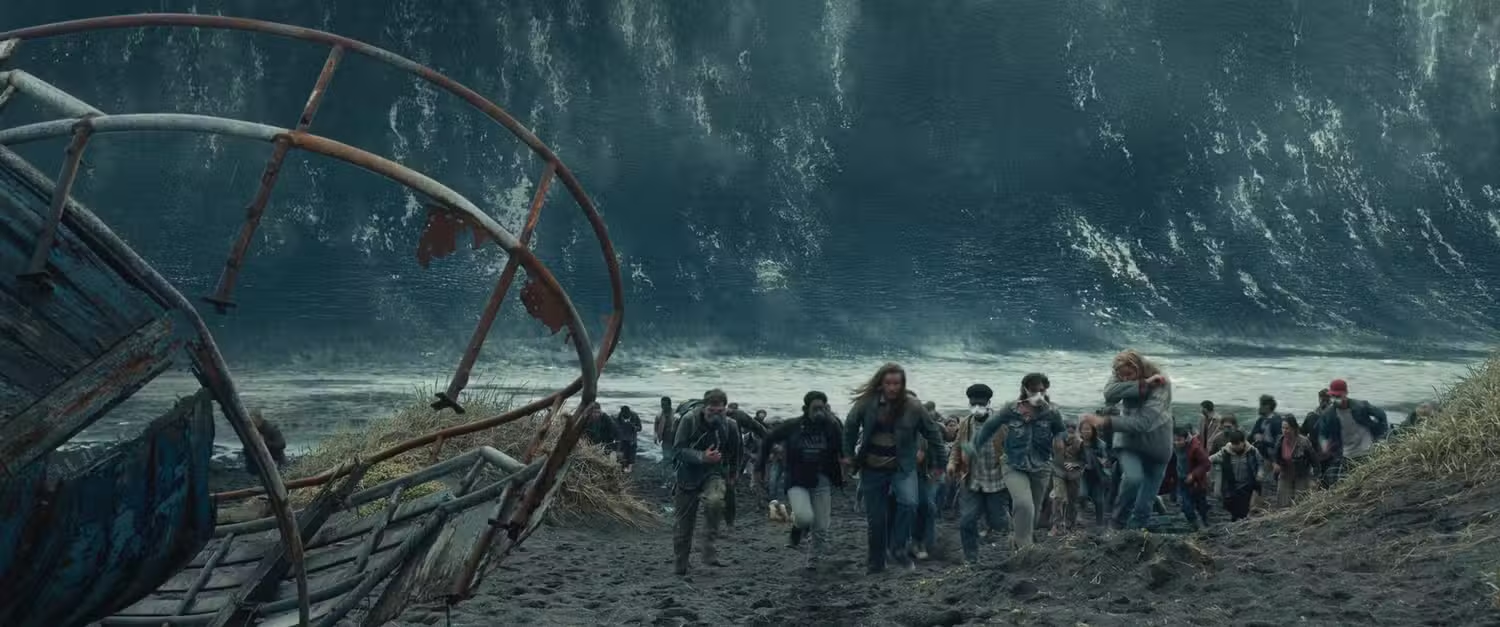
When a perfect storm of radiation and violently shifting tectonic plates destroys the bunker, the survivors scramble to the surface like ants scurrying from a lifted rock. The Garrity family and Dr. Amina are able to scramble to one of the enclosed lifeboats that everyone is scrambling for. These scenes echo the kind of panic found in Spielberg’s “War of the Worlds” as people fight for limited space on the boats. There’s also a bit of Noah’s Ark going on as those who couldn’t make it into the boats are engulfed by tsunami-like waves. John and his family, along with the other survivors on the boat, determine that the best plan is to head southeast to Europe.
Things get visually interesting once their boat hits land, specifically in Liverpool, where the ocean has risen to the roofs of most buildings, leaving us to wonder what happened to civilization here. This is where the “migration” begins for the characters, as the Garrity family and Dr. Amina learn that England’s low-income, poverty-stricken citizens are the ones still out in the open, living on the streets and doing their best to keep warm and survive. As they make their way through this new environment, they will have to figure out who is a friend and who poses a threat, as everyone has the same survival goals. Whether or not they are only looking out for themselves is something John has to figure out as he becomes more determined than ever to get Allison and Nathan to a safe place.

The sequel differs from “Greenland” in that the first movie found everyone desperate to reach the titular continent, whereas “Migration” finds everyone fleeing it. Geographic instability has forced the Garrity family into the open, leaving them just as vulnerable and desperate as they were in the previous movie. They encounter a dried-up English Channel they’ll have to drive through and a gaping chasm they must carefully navigate on foot to reach France. Gone is the family tension from the last movie, as time in the bunker has no doubt brought the Garrity family closer together. The threat is no longer what is coming at them from above, but moreso who they encounter on their long journey, such as military personnel or marauders.
“Migration” is a more arduous journey than the frantic trek that the family endured in the previous movie. Before, they didn’t know what to expect, and now they have an understanding of how mankind lives in this post-Clarke landscape. Once they reach France, they are briefly taken in by Denis Laurent (William Abade), who has managed to stand his ground at the farmland home he shares with his ailing wife and teenage daughter, Camille (Nelia de Costa). Note: this is the one teen trope that you’ll find in many an apocalyptic thriller. While their interaction with this French family proves rather predictable, especially when Denis asks John to take his daughter with them as they continue to the crater, it’s still a welcome break to see another family offer them a reprieve from danger.
Waugh reunites with production design Vincent Reynaud (who worked on Kandahar”, which also starred Butler) and cinematography Martin Ahlgren, who lensed the other Waugh-helmed movie coming out this month, the Jason Statham-led thriller, “Shelter”. The drab earth tones we see here are fitting for a ravaged Earth, but it also accentuates the melodrama of the sequel. The color palette also pairs appropriately with the movie’s dour mood.
If you catch. “Migration” in the theaters, there’s one of those eye-rolling “Thanks for coming” moments with Butler before the movie starts. He shares how this one is more emotional than the last, and he’s right: the sequel definitely carries heavier emotional weight, and, to be honest, that doesn’t make it as riveting as the first movie.

RATING: **1/2


