THE ODYSSEY (2026) review

written by: Christopher Nolan
produced by: Emma Thomas and Christopher Nolan
directed by: Christopher Nolan
rated:
runtime: 173 min.
U.S. release date: July 17, 2026
Since leaving Gotham City behind 14 years ago, writer/director Christopher Nolan has taken on epic projects, telling robust stories in unconventional ways. Time has played a major role in his films, whether it’s integral to the stories themselves, as in “Interstellar” and “Dunkirk”, or in how he tells the story nonlinearly, as in “Tenet” and “Oppenheimer”. Both of those concepts of time are incorporated in his latest grand endeavor, “The Odyssey”, which is Nolan’s adaptation of Homer’s epic poem of the same name, which has been around for nearly 3,000 years. Nolan takes on the challenge of adapting the tale of danger, survival, and political upheaval with significant gusto, incorporating groundbreaking IMAX-fueled visuals to offer a transportive viewing experience.
To that goal, Nolan succeeds, but the film has some casting problems and screenwriting mishaps, and its three-hour tour could’ve benefited from a trim. Then again, maybe we’re supposed to feel the length, considering how long and arduous the titular journey is.

The film opens in the dining hall of the royal palace in Ithaca, where a bard (rapper Travis Scott) recounts the story of Odysseus to an enraptured audience. The Greek king and his fellow soldiers have been absent from his kingdom since the Trojan War ended eight years ago. This leaves his son, Telemachus (Tom Holland), who is too young to remember Odysseus, concerned about the suitors who impatiently wait for the hand of Penelope (Anne Hathaway), his mother, who wonders whether Odysseus has died. Among the many suitors are Polybus (Corey Hawkins) and Antinous (a snivelingly cartoonish Robert Pattinson), the latter of whom is plotting to become the next king. Only Telemachus firmly believes his father is alive, as does Eumaeus (John Leguizamo, in a standout role), Odysseus’s faithful blind servant. Meanwhile, an amnesiac Odysseus (Matt Damon, going hard, physically and emotionally) has been kept on a remote island by the nymph, Calypso (Charlize Theron), who wants to keep him as her immortal husband. While Telemachus sets out to find Odysseus, the king struggles to find his way back to his wife, facing peril, death, and shame at every turn.
Nolan’s approach to telling this legendary tale of Greek mythology is to split it into three arenas and play with non-linear editing, thanks to editor Jennifer Lame, an Oscar winner for her work on “Openheimer” (she’ll likely earn another nomination for her work here). There’s the current story of Telemachus and Penelope in Ithaca, where they are holding off hundreds of suitors eyeing the throne. At the same time, Odysseus gradually recalls what perilous adventures he and his men – including Eurylochus (Himesh Patel), his second-in-command, all serving under Agamemnon (Benny Safdie), the king of Mycenae in the Trojan War – have endured. Piecing together that past provides viewers with the details of his odyssey – or at least, Nolan’s version.

In his attempt to ground the story in realism, Homeric experts may be taken aback by the changes Nolan has made to the poem. Although Zeus is brought up, and Poseidon is briefly mentioned, no Greek gods are seen in this iteration, unless you count Athena (Zendaya), but even she is not what we expect of that namesake. That may be fine for those who don’t remember the book very well or have never read it, but it does take the awe and scope out of a Greek mythological yarn, which has always included the differences and similarities between gods and humans. Quite often in those mythological tales, the gods decide what to do with humans and whether to intervene.
There is mention of “Zeus’s Law, which, from what we can gather, is essentially “do unto others as you would have them do unto you,” popularly known as being derived from Luke 6:31 in the Bible, but also a concept that many cultures adhere to. Okay, fine. But, because the gods are not a presence here, this “Law” winds up being a conundrum, a supposed unspoken tenet that everyone is expected to follow. Curiously, Odysseus doesn’t seem to uphold the “Law”, nor does he revere (or fear) any of the gods, like the men under his command. It’s never truly explored here, but it’s implied that his stance is largely due to the horrors of battle that he’s witnessed over the years.
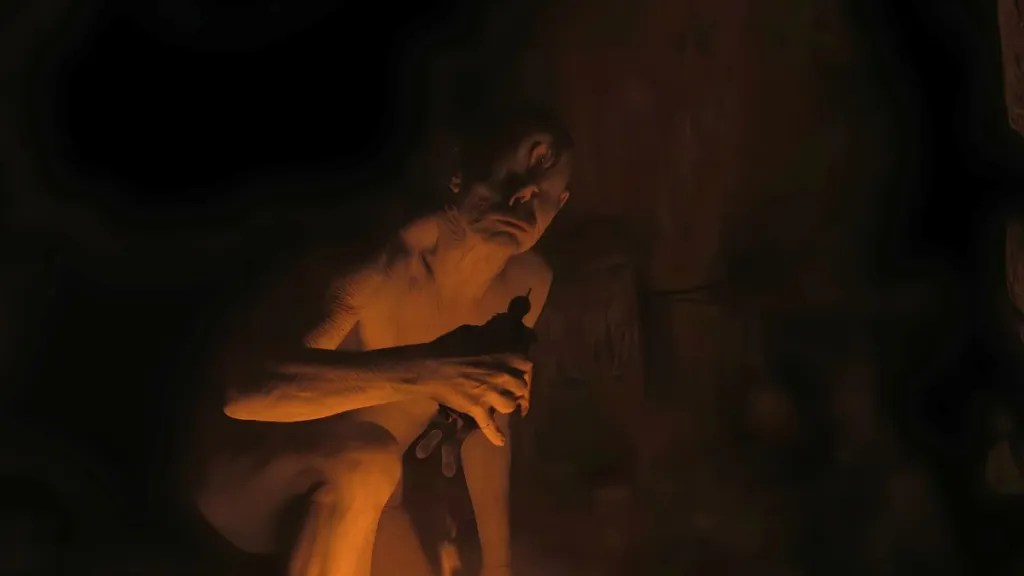
We see another “Law” play out in different ways during Odysseus’s long journey home, as he and his men stop at different islands for food, water, and supplies. This is the “hospitality” part of the Law, an unwritten code dictating how hosts must treat all guests and strangers with absolute respect, and in return, guests must behave courteously. It’s primarily the idea that humans should be kind and generous to strangers because they could be gods in disguise, which is very similar to Hebrews 13:2: “Do not forget to show hospitality to strangers, for by so doing some people have shown hospitality to angels without knowing it.”
Do Odysseus and his men experience such hospitality as they make their way home, and do they also extend such hospitality to those they meet? Not quite, but in a harsh world where survival is the main goal, thinking of others isn’t necessarily the first thing that comes to mind. During a stop on one island for supplies, the men encounter a giant sheep-herding cyclops (in the book, he’s named Polyphemus, son of Poseidon), who captures them in his cave home. Some of Odysseus’s men are eaten by the giant (an eerie on-set performance from Bill Irwin), so the king has to get crafty with an escape plan. While this cyclops is obviously not very hospitable, he’s also dealing with uninvited guests, who wind up stabbing him in the eye. Upon their exit, when the men are clear of the giant, Odysseus blinds him with an arrow, supposedly as revenge for eating some of his men. No one is really upholding Zeus’s Law during this encounter. In Homer’s poem, Poseidon learns that Odysseus blinds his son, and winds up cursing them by making sure they get lost at sea.
Nolan includes highlights of Homer’s work, showing Odysseus’s tour of misery, which put him and his men in contact with other threats and fantasy creatures. They land on an island where they are ambushed by an army of giant armored warriors (they are cannibals in the book) who wind up slaughtering many of Odysseus’s men, reducing their ships from three to one. What’s left of Odysseus and his men seek refuge on another island, inhabited by a woman named Circe (the always great Samantha Morton), who takes in the hungry soldiers and feeds them. Such hospitality quickly takes a dark turn when the witch turns them into pigs, telling Odysseus that this is their true form. Nolan handles the horror of this transformation in unique and creative ways, making the dark magic look quite naturalistic and unnerving. Rather than lash out at the witch, Odysseus has to persuade her to turn them back into men. In the book, Odysseus winds up staying on the island with Circe for a year and has two children with her. Nolan understandably skips that to keep the story moving and to keep us believing that Damon’s Odysseus has eyes only for his wife.

The supernatural elements of these encounters are downplayed, with CGI used only when necessary. This practical approach grounds their adventures in unexpected realism, but it also puts limitations on the “magical times” they live in. When Odysseus and his men sail near the island of sirens, he has all the men fill their ears with beeswax, so they won’t fall victim to their sonic lure, yet has them tie him to the center of the ship without wax, because he wants to be the first to survive an encounter with the sirens. We never get a good look at the sirens, nor do we understand why Odysseus willfully puts himself through such torture. Hasn’t he been through enough already?
Their next stop is the Underworld, where they encounter shades, or the souls, of those who’ve died. This is arguably the most compelling sequence of the film, as Nolan and his production designers lift these figures from an ashen terrain, making them appear covered in muddy coffee grounds. This is where we reunite with Sinon (Elliot Page), among others, a Greek soldier who played a pivotal role in the Trojan horse scheme Odysseus devised. It’s one of many emotional turning points for Odysseus, especially when the blind prophet Tiresias (James Remar) foretells Odysseus’s near future. Back on the sea, he has to steer his men through either a swirling Charybdis or its counterpart, the man-eating Scylla, and whichever path he takes, he will lose more men.
Back in the present, Telemachus struggles with his place in Ithaca, protective of his mother and pushed around by Antinous before embarking on his own voyage. He takes to the sea with his right-hand man, Mentor (Ryan Hurst), in search of Odysseus, which connects him to Agamemnon’s brother, Menelaus (Jon Bernthal), King of Sparta, who’s taken a bride in Helen of Troy (Lupita Nyong’o, who also plays Clytemnestra, Agamemnon’s wife). By the time everyone convenes back at Ithaca, Odysseus must introduce himself to Telemachus and contend with all the suitors who have taken over the palace, waiting for Penelope to choose a new mate.
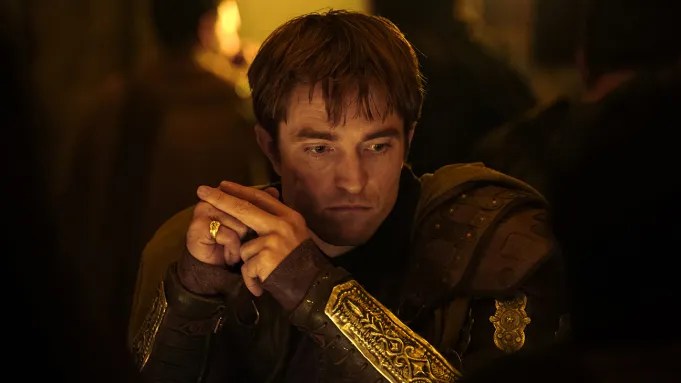
There’s nothing easy about returning home after war. Two years ago, there was a whole movie about Odysseus’s return to Ithaca starring Ralph Fiennes, aptly titled “The Return”. That movie takes its time as a weak, world-weary Odysseus slowly reintegrates himself into the people of Ithaca, hesitantly and cautiously approaching his son and his wife. There’s some of that here, with Damon near the end of the third act, but Nolan is a little uneven in the film’s dramatic encounters. That’s partly because some performances are a bit hit or miss, like Pattinson, who isn’t given a whole lot to do, beyond slinking and sniveling. It could also be because there are so many characters that it’s impossible to determine who’s who and why they matter. For example, Mia Goth and Logan Marshall-Green have minor roles, portraying twin siblings Melantho and Melanthius – granted, I didn’t know that and had to look it up. It’s a little distracting when you recognize an actor but can’t quite place the purpose of their character in a film.
Nolan’s dialogue isn’t always as smooth as he modernizes it for today’s audience, but he also lingers too long on monologues, especially in a film primarily intent on offering cinematic spectacle. That’s when the film is at its best, and Nolan reunites with two immensely talented Oscar-winners from “Oppenheimer” to create the captivating sound and vision of it all. Not only does cinematographer Hoyte van Hoytema provide immersive, memorable visuals, but he also does so by shooting the entire feature on IMAX film, a first. Composer Ludwig Göransson takes a different approach to his score, forgoing an orchestra and instead using various gongs, lyres, aulos, and synthesizers to evoke sounds that place viewers in the Bronze Age. At times, the score goes way too big. The loud percussion often drowns out the dialogue, making the lines hard to understand, which is something we’ve experienced before with Nolan’s films.
Nolan’s approach to the immense endeavor is more in line with Kurosawa or Malick than with Harryhausen or Lean. Shooting in six different countries and using minimal CGI, “The Odyssey” feels vast and enormous, and by the end, the hero’s long journey is palpable. It’s not that the film feels long, but rather, by the time it ends, you feel the emotional toll, immense grief and guilt, along with the physical pain the characters on the screen have experienced.

RATING: ***1/2


