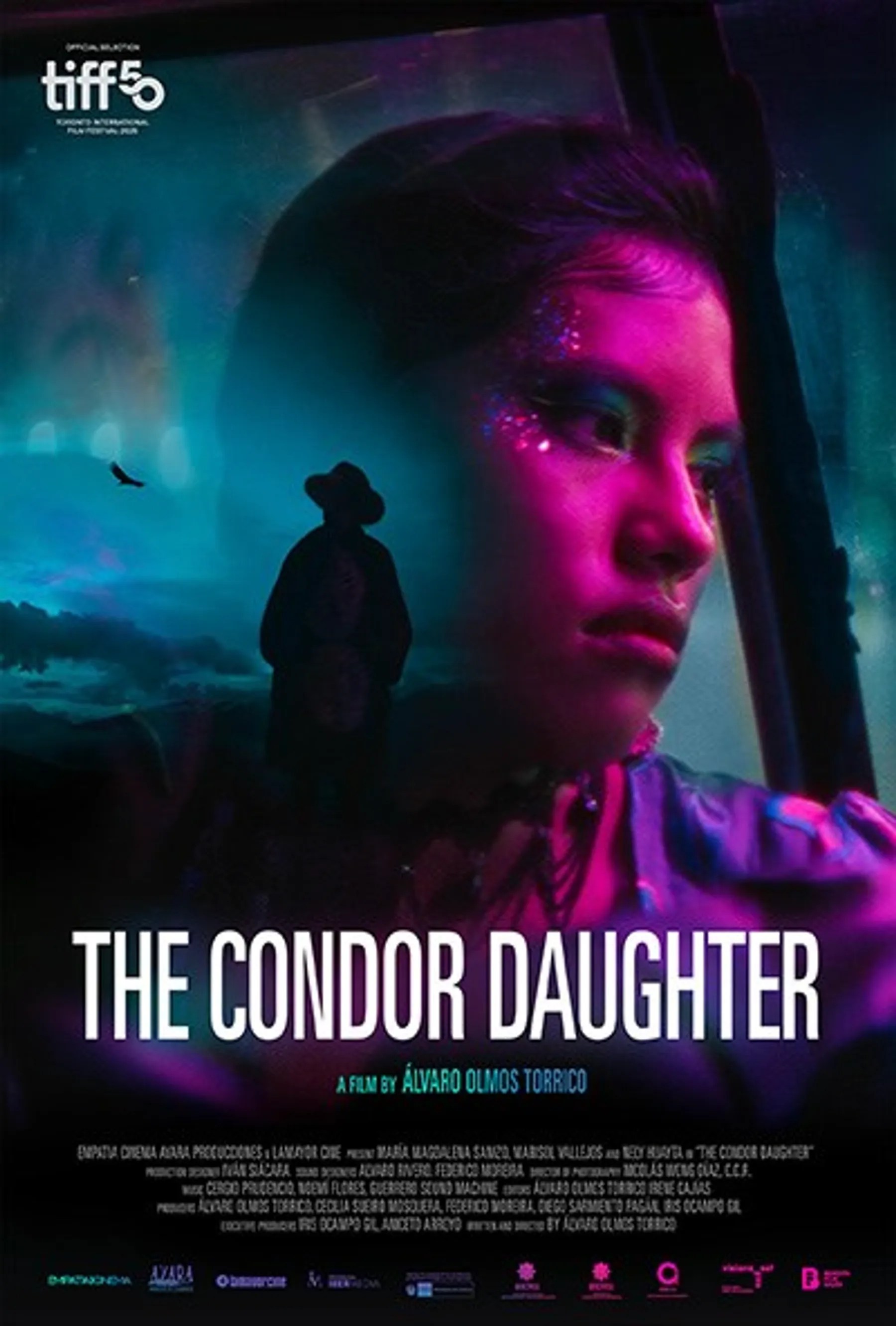
THE CONDOR DAUGHTER (2025) review

written by: Álvaro Olmos Torrico
produced by: Álvaro Olmos Torrico, Cecilia Sueiro Mosquera, Diego Sarmiento Pagán, Federico Moreira &
Iris Sigalit Ocampo Gil
directed by: Álvaro Olmos Torrico
rated: not rated
runtime: 109 min.
U.S. release date: September 11, 2026 (NY) and September 18 (LA)
For his second feature, “The Condor Daughter,” Bolivian writer/director Álvaro Olmos Torrico focuses on indigenous communities and the women who dutifully anchor them. It’s an introspective tale similar to his previous work; his background in documentaries and his 2019 feature debut, “Wiñay,” both focus on a self-reflective protagonist, which typically creates a rich viewing experience. That’s true of this film, too. Olmos Torrico finds conflict in both his characters’ internal and external journeys, following them with respect and sensitivity. His focus on female characters makes for an especially rewarding viewing experience, and “The Condor Daughter” specifically considers the ideas of evolution and redemption.
Set in the Andes Mountains of Bolivia, the modern-day story introduces us to teenager Clara (Marisol Vallejos Montaño), an apprentice midwife to her mentor, Ana (Maria Magdalena Sanizo), a veteran midwife among the indigenous Quechuan people in the mountainous area. Clara is quiet and shy, following the no-nonsense, stoic Ana, with whom she shares a hut; both serve local women, whether delivering babies or meeting whatever needs arise at any stage of pregnancy. There’s an unspoken expectation that Clara will replace Ana at some point, but her friend Flora (Alisson Jimenez), who often comes down from the mountains to frequent the local city with her biker boyfriend, Franco (Alberto Loza Franco), knows there’s much more to Clara than others realize, including her talent for singing. Ana only lets Clara sing during deliveries, as it soothes soon-to-be mothers during labor.
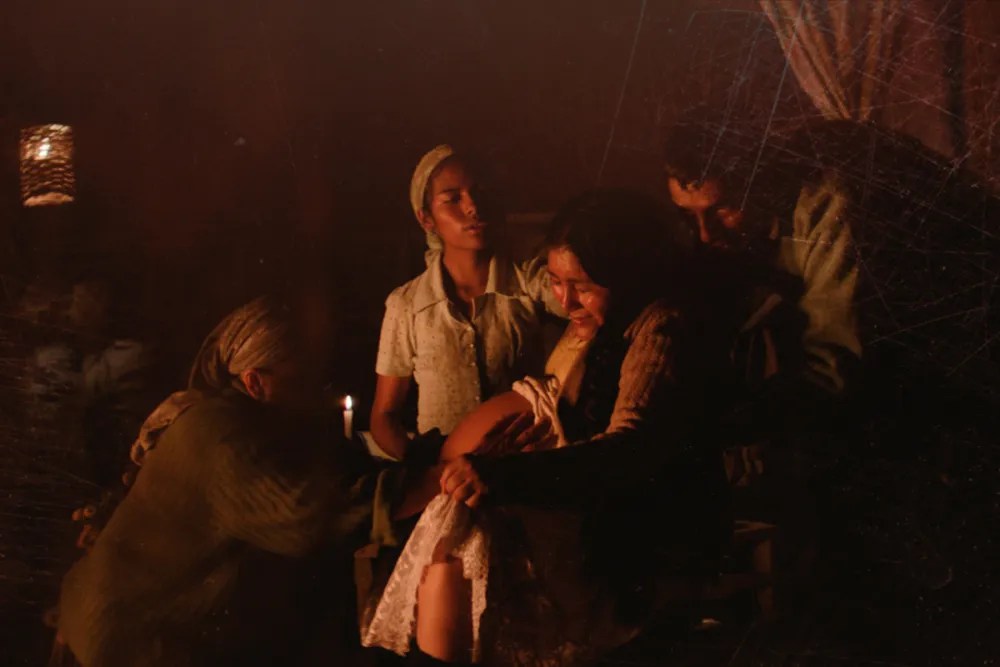
A couple of things happen that push Clara outside her normal routine: she receives a tip from a local in the form of a radio, and a stranger hears her singing and encourages her to use her talents for the special events he organizes. These events expose her to different music and, for the first time, to being seen for who she is. Of course, Ana is wary of outsiders and frowns on anything that strays from tradition and her work, and she isn’t shy about making that known to Clara. Another significant moment is when Clara witnesses her community shame a woman who broke the rules and decide on a public punishment for her. Enraged, Clara breaks free and travels to nearby Cochabamba with Flora and Franz.
The superstitious community blames Clara’s abrupt departure for a recent unfortunate event, and they tell Ana she must bring back her apprentice to make it right. While in the city, Ana meets her friend Beatriz (Nely Huayta), who helps her track down Clara; in the process, Ana’s perspective broadens as she takes in the sights and sounds of the new environment, and she may even come to better understand Clara.
At one point, health officials visit to discuss starting a rural hospital to replace midwifery care. Ana is skeptical about city medicine and doctors who think they know everything, thinking they don’t actually care. Ana’s complex journey is the film’s central narrative, as she confronts modern culture and how it is changing her ancestral way of life. Her quiet observations echo thoughtful truths about human nature that resonate far beyond this beautifully specific place.
From the start, it becomes clear that Olmos Torrico and cinematographer Nicolas Wong Diaz are truly smitten with the setting of “The Condor Daughter”, as seen in how they capture and incorporate the environment. From spectacular mountain settings that immerse us in rural Bolivian culture to a contrasting urban landscape shot just as strikingly, the film maintains a visually captivating look. Wide glimpses of broad mountain ranges, shot with anamorphic lenses, display the vast landscape that dwarfs Clara, her peers, family, and budding dreams.
These decisions show how their Andean home has a serene yet forceful presence that has held a grasp over the community for hundreds of years, commanding respect and mirroring the women at the core of the script – the gravity of their position in the village. In contrast to those sweeping views, the camera often rests in snug confines that highlight Clara’s inner struggle and longing as she ponders her future.

The relationship between the two women is front and center throughout “The Condor Daughter,” and Olmos Torrico connects the pair’s relationship to the earth. Much of this draws on Olmos Torrico’s own experience exploring the Bolivian Andes and meeting a Quechua midwife, who was described as one of the last in the region. In fact, Olmos Torrico filmed in the same areas where that midwife lived, immersing himself and his crew in the communities, which lends the film a convincing authenticity. Magdalena Sanizo’s Ana draws on his experience, as the writer/director focuses closely on her expressions and subtleties. Her performance feels naturally authentic, as does her chemistry with newcomer Vallejos Montaño, who makes her film debut here and was born in Cochabamba. As a Quechua-speaking, self-taught musician, she was already a fitting choice for Clara, but she also undertook intensive training in performance, ancestral singing, and midwifery practices. Together, these elements, along with the film’s largely non-professional cast, create a naturalistic approach to “The Condor Daughter” that feels like a documentary.
Music also plays an important role in the film, combining ancestral curative hymns that mingle with Quechua pop anthems. The more modern music often plays from the hand-me-down radio Clara was gifted, which she uses as a lifeline to the outside world, and that same music lures her to the city to try her hand as a vocalist. While Olmos Torrico includes music from the ’80s and ’90s, the Quechuan youth listen to these songs as if they are current. To them, they are, since music and pop culture often reach indigenous communities decades later.
Olmos Torrico spent six years making “The Condor Daughter”, conducting extensive research and preparation, which supports and enhances the director’s vision. Most compelling and memorable is the film’s tender study of youth and the extraordinary weight of self-realization, communicated through sound that stands as rebellion, expression, a cure for maladies, and a place called home.

RATING: ***