WHO KILLED ALEX ODEH? (2026) review

produced by: Dawne Langford, William Lafi Youmans, Jason Osder & Daniel J. Chalfen
directed by: Jason Osder and William Lafi Youmans
rated: not rated
runtime: 84 min.
U.S. release date: October 30, 2026
Watermelon Pictures has had a crazy busy year releasing films in 2026. The film production and distribution company was founded two years ago by brothers Badie and Hamza Ali, with the goal of offering narrative features and documentaries that contradict the way Palestinians and Arabs have been represented and dehumanized in mainstream media for decades. They made the historical drama “Palestine 36” and the important documentary “American Doctor,” and now there’s “Who Killed Alex Odeh?”, a documentary that won the Special Jury Award earlier this year at Sundance. The titular question may as well be rhetorical, since directors Jason Osder and William Lafi Youmans never offer a definitive answer, but viewers won’t be left with any doubts.
If you’re like me, you probably have another “Who” question going into the film, such as: Who was Alex Odeh? Perhaps more intriguing and revealing is when he died, which is the source of understandable frustration, considering his unresolved murder occurred just over forty years ago.
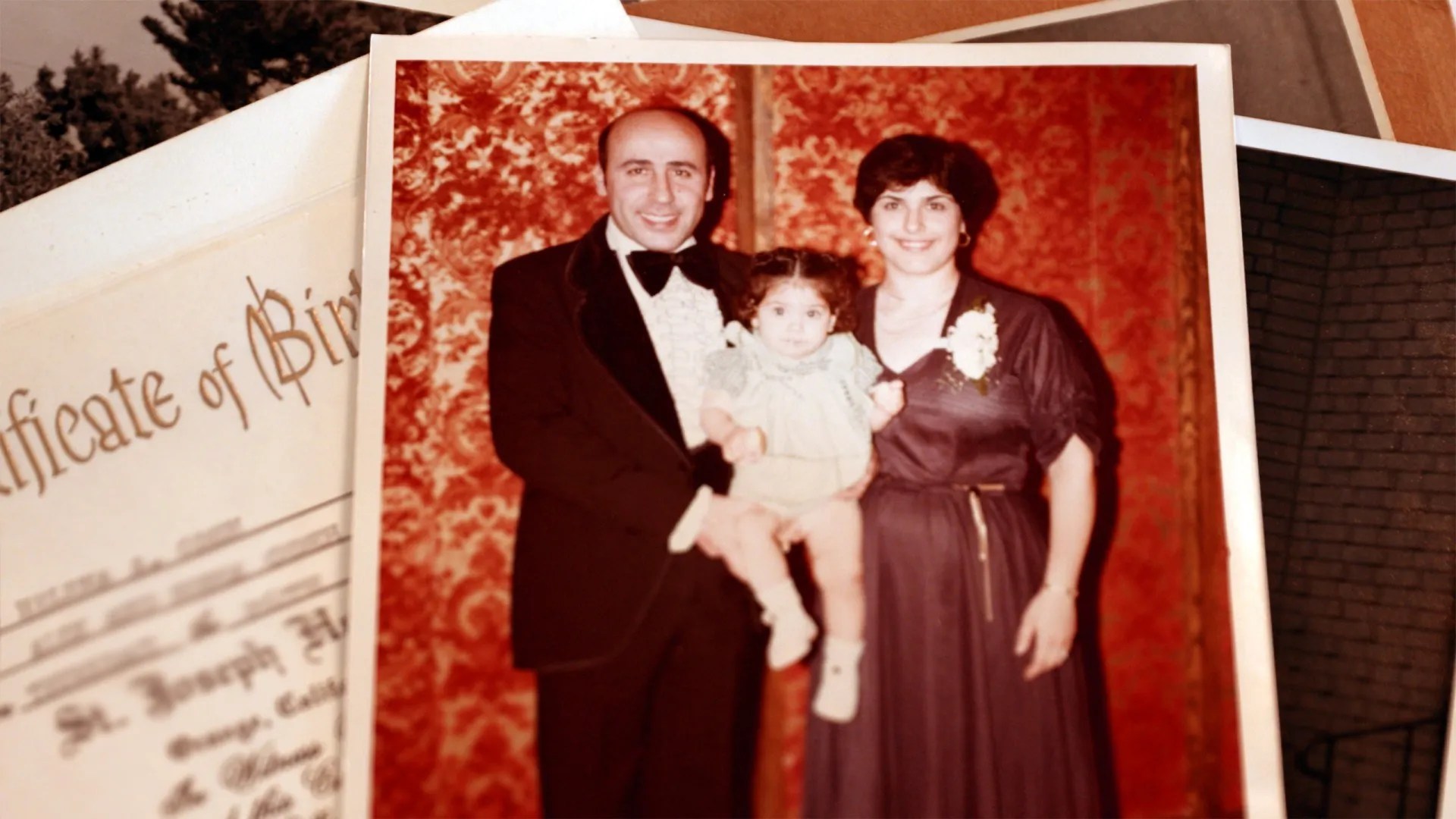
On the morning of October 11, 1985, Palestinian-American Alexander Michel Odeh was killed by a pipe bomb as he opened the door of his office at 1905 East 17th Street in Santa Ana, California. The 41-year-old poet and civil rights activist left behind his wife Norma and their three young daughters, Helena, Samya, and Susan. Prior to that tragic moment, Odeh had spent his time advocating for Palestinian rights and safety, while at the same time creating open lines of communication for the Israeli-Palestinian conflict, with the goal of peace and resolution. In fact, shortly before his killing, Odeh appeared on the television show Nightline, which featured a dialogue between Odeh and a representative from the Jewish Defense League (JDL). Odeh was the only fatality that morning and served as the West Coast Regional Director of the American-Arab Anti-Discrimination Committee (ADC). Was he the sole target or an unexpected casualty?
“Who Killed Alex Odeh?” quickly becomes more than your standard true-crime documentary. That’s because the film reveals the answer to its title early on. It is curious that Osder and Youmans — one of them Jewish, the other a Palestinian-American — don’t build an involving mystery for their documentary to explore, but instead focus on the troubling absence of one. While some documentary conventions are incorporated here, such as archival news coverage, talking heads, and photographs of Odeh and his family, the directors subvert viewers’ expectations by clearly indicating Odeh’s death was domestic terrorism. Rather than staying in the true-crime subgenre, the directors and Israeli activist journalist David Sheen believe three suspects – Robert Manning, Keith Fuchs, and Andy Green – and the documentary then proceeds to ascertain what became of each of these men.
All three suspects were members of the JDL, yet the film emphasizes how the organization’s chairman at the time, Irv Rubin, quickly denied JDL involvement in Odeh’s death while also immediately responding. The documentary includes televised clips of Rubin making several public statements about the incident, callously stating, “I have no tears for Mr. Odeh,” and “He got exactly what he deserved.” Both the FBI and Israeli intelligence failed to act then and since. At the time, the three suspects were allowed to return to Israel, despite the American Jewish Committee and the Anti-Defamation League both condemning the murder and President Reagan offering his condolences. Interestingly, Rubin committed suicide in jail in 2002 while awaiting trial on charges of conspiracy to bomb private and government property.
The most compelling and intriguing aspects of “Who Killed Alex Odeh?” are how the film shows who Alex Odeh was and how Sheen investigates these three suspects. Odeh was born in Jifna, Mandatory Palestine, and immigrated to the United States in 1972 before later becoming a naturalized American citizen. We see footage of his public comments on the 1985 Achille Lauro hijacking in the days leading up to his death, in which he sympathizes with the Palestinians yet condemns their terrorist acts (ironically, his condemnation of those methods never made the final news broadcast of his remarks). We’re also given moments with Norma and Helena, both grief-stricken that Alex’s killer(s) haven’t been brought to justice. Sheen’s investigative tactics give the film some almost thrilling moments, especially related to his process. We see some light subterfuge when Sheen poses as an ultra-Orthodox Jew (a Zionist) and sits across from Baruch Ben Yosef (who grew up in New York City as “Andy Green”) in his West Bank home, hoping to capture their conversation on camera. Ben-Yosef excuses himself when Odeh’s name comes up, his reaction landing somewhere between irritation and exposure. Another scene shows Sheen calling a retired detective who worked the Odeh case decades ago, who casually drops information about how Mossad and the US attorney’s office told him not to pursue the known suspects. Sheen is surprised by this, but sadly it tracks with the way everything has gone down after Odeh’s murder.
Odeh comes back into the film whenever we check in with his surviving family members. Much of “Who Killed Alex Odeh?” examines how Arabs were viewed by media and popular culture circa 1985. There’s a clip from “Back to the Future” showing Marty’s being chased by terrorists and broad cartoons of sheiks. Just think about where most of the terrorist bad guys were from in all those action flicks from the 80s and 90s, and it’s easy to see how terrorism is often seen as a Muslim practice. As the film contextualizes this ongoing racism and stereotypical sickness that’s been prevalent for far too long, somehow we wind up losing Odeh.
There’s a case to be made for a documentary that focuses on what it’s like living in America as a U.S. citizen after your loved one was killed in a hate-based murder, but “Who Killed Alex Odeh?” doesn’t delve too deep into that. The answers to the film’s titular question become so infuriating primarily because nothing has been done about a Palestinian-American being killed on U.S. soil. There are seemingly no politicians still concerned with the injustice of Odeh’s murder, just as there aren’t enough politicians coming out against the current genocide of Palestine itself.

RATING: **1/2

