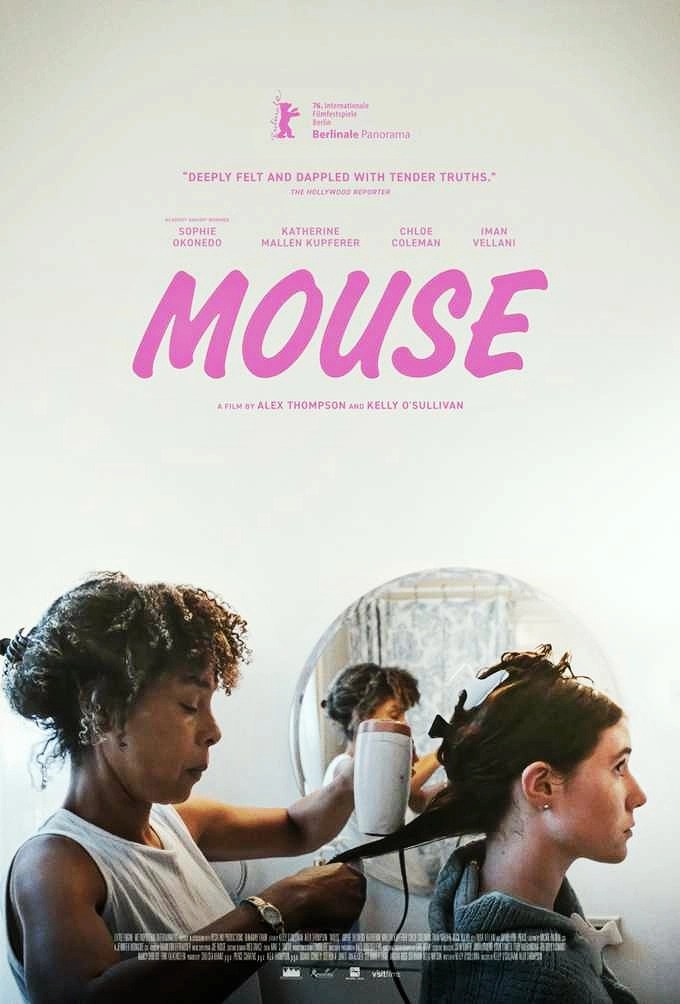
MOUSE (2026) review

written by: Kelly O’Sullivan
produced by: Chelsea Krant, Pierce Cravens, Alex Thompson, Bonnie Comley, Steven A. Jones, Ian Keiser, Stewart F. Lane, Abigail Rose Solomon & Alex Wilson
directed by: Kelly O’Sullivan and Alex Thompson
rated: R (for language, some sexual references, and teen drinking)
runtime: 120 min.
U.S. release date: November 6, 2026 (limited) and November 13, 2026 (wider)
I was absolutely smitten with “Ghostlight”, the last film made by writer/director Kelly O’Sullivan and director Alex Thompson, and I became officially interested in any film the real-life partners were involved in. It became my favorite film of 2024, and I thoroughly enjoyed introducing others to the tender, touching, and funny take on grief and the need for connection. Needless to say, any follow-up would be highly anticipated, and after the positive word-of-mouth for “Mouse” after it premiered at the Berlin International Film Festival, it definitely became my most anticipated film of the year. I’ve been a fan of O’Sullivan/Thompson since “Saint Frances”, their 2020 dramedy, so admittedly, I come to “Mouse” with a certain predisposition.
Those previous films seem to come from a personal place, which makes sense, considering O’Sullivan has mentioned they include autobiographical elements. The same can be said for “Mouse”, which takes place in Arkansas circa 2002, where O’Sullivan was born and raised, and is set at a time when she was around the same age as the young protagonist in this film.
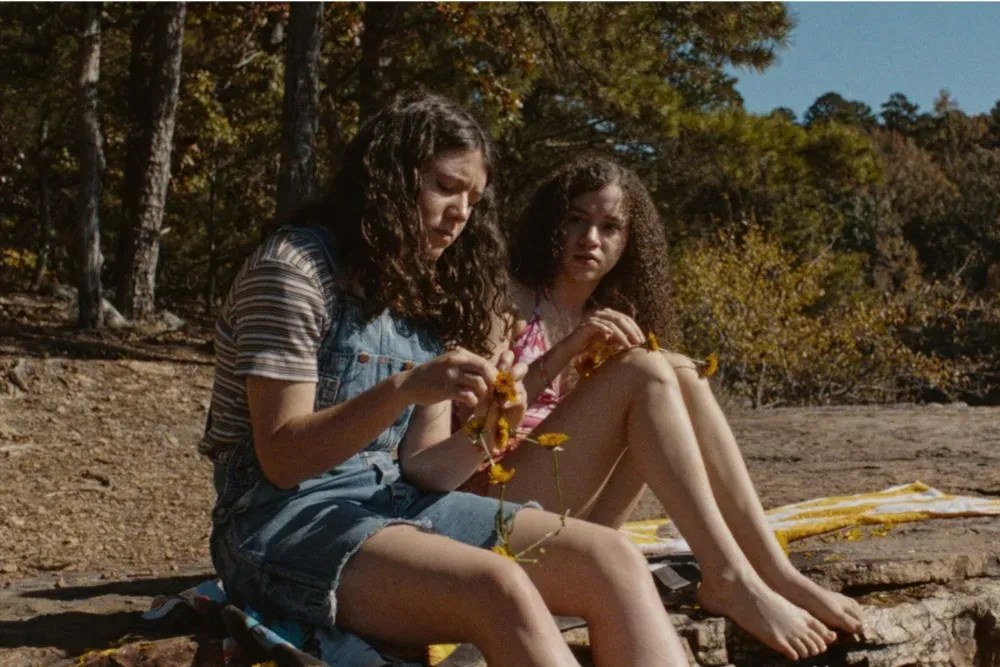
Minnie Dunn (Katherine Mallen Kupferer) and Callie Bell (Chloe Coleman) are best friends going into their senior year of high school in north suburban Little Rock. Both are only children and have developed an inseparable bond that goes beyond siblings. They protect each other around peers and teachers and quickly defend one another. They aren’t identical, however. Minnie is definitely less confident and outgoing than Callie. Unlike Minnie, Callie is pretty popular and has other friends, such as admiring classmates Cara (Audrey Grace Marshall) and Brandi (Addisyn Grace Cain), both of whom consider themselves Callie’s true best friends, yet they are on her periphery since no one is closer to her than Minnie. They are mere hangers-on compared to the kinship Minnie and Callie have developed.
While Minnie’s world in this small town orbits around her best friend, Callie has broader plans for herself that involve leaving their familiar surroundings. Callie’s a theater kid, and her past and current involvement in high school productions have confirmed her noticeable talent. She sees herself developing that talent at Juilliard after high school, but she’s practical and humble enough to know it won’t be easy. When Callie shares these dreams with Minnie, it’s as if they are experiencing them together, and clearly Callie wouldn’t have it any other way, because how could she experience it all apart? Yet Minnie is wise beyond her years, and knows their future may not follow the same path.
That future is altered more suddenly than anyone could’ve predicted. The day after a sleepover with Callie at a mutual friend’s house, Minnie makes her long walk home from her job at a daycare center. A random stranger offers her condolences about Callie. When she arrives at Callie’s house, Minnie walks straight into the kitchen, passing the shocked neighbors on the front lawn. Panicked, she asks two moms where Callie is and is told there was an accident; a fearful Minnie instinctively flips through a phone book to find local hospital options. One of her peers bluntly delivers the devastating news that Callie is dead. Her forever best friend is gone.
The loss hits viewers like a sudden gut-punch because O’Sullivan and Thompson have given us such quality, albeit short, time with these two best friends. From hilarious and intimate conversations in Callie’s bedroom to a memorable afternoon swim in a nearby quarry, the moments spent with these two young women are cherished. That’s attributed to O’Sullivan’s intuitive screenplay and the truly remarkable performances from Colemen and Mallen Kupferer.
Minnie’s relationship with Callie was the only true thing she could hold on to. Her relationship with her mother, Barbara (portrayed by Mallen Kupferer’s own mom and “Ghostlight” co-star, Tara Mallen), is fraught, primarily because Minnie is embarrassed by their home life: it’s a mess in both literal and figurative terms. Barbara, who is raising Minnie and her young toddler brother as a working single parent, may not be as refined and cultured as Callie’s family, but that doesn’t mean Minnie is unloved. Minnie is also unaware that Callie’s family life may not be as idyllic as it seems. These are all things we can relate to. We’ve all had that friend we think has it all, but it takes us a while to realize their nice house, fully stocked kitchen, and cool mom aren’t what they seem.
Like in real life, the story shifts suddenly as Minnie desperately grapples with life without Callie. She naturally gravitates to the other person, who inevitably does the same: Callie’s mother, Helen (a heartbreaking Sophie Okonedo), and the two begin spending a lot of time together, connected by the person they miss most.

This doesn’t turn into one of those stories where the grieving mother takes in her dead daughter’s best friend as if she were her own child. That would be so cliched and too easy. Minnie and Helen aren’t thinking about how to categorize their time together. They’re preoccupied with what each day looks like without Callie. Life goes on, and maybe they can do that together. Will they become substitutes for the people they long for? Their relationship isn’t as simple as Minnie becoming the daughter Helen lost and Helen becoming the mother Minnie desires. It’s all foreign territory for both, and they will have to determine what steps to take on their own.
The immediate aftermath of loss looks different for each character. Minnie has to navigate her senior year without her best friend, and Helen still lives in a home that reminds her of her daughter at every turn. Neither of them can do this alone, but they also can’t lean solely on each other. Minnie gradually develops a new friendship with Kat (a wonderful supporting turn from Iman Vellani), who works at the local video store (that, and no incessant smartphone use here, are one of the many reasons why it’s a great thing this story is set in 2002), someone who lost her own mother not long ago, and this will result in Minnie discovering something new about her sexuality. Minnie will also have to figure out what her interactions will be like with other classmates who shared a friendship with Callie, like her former boyfriend, Brad (Beck Nolan) – after all, many of them only associated with Minnie because of Callie. As she tries to figure out who she is without Callie, she also steps out of her comfort zone, like when she works on a musical number, despite not having Callie’s skill set. This puts another adult, Mr. Murdaugh (a great David Hyde Pierce), in Minnie’s stratosphere, with the easy-to-approach drama teacher offering some sage advice about grief during a pivotal moment.
Meanwhile, Helen has to figure out what she can do with her life. Not long after Callie’s death, she separates from her husband, Mark (Christopher R. Ellis), something that often happens to couples after their teenager dies. They were an odd pairing anyway, and Helen admits to Minnie that they were really only staying together for Callie (also something quite relatable for viewers). Helen has different challenges than Minnie, since she’s constantly reminded of Callie, having obviously spent more years with her. She also knows how important Minnie was to Callie, and how distraught Minnie must be. So, she’s having to figure out what to do about her own feelings as she contends with practical decisions such as what to do about Callie’s car and clothes, while also figuring out what place she should have in Minnie’s life.

Helen makes a big step on her own in addressing her loss when she attends a local grief recovery group for parents who’ve lost children. She’s like a stranger in a strange land as she listens to others discuss where they are in their own grief journey. These moments lend a special sense of authenticity to the feature since O’Sullivan and Thompson filmed them in an actual grief recovery meeting in Little Rock. Having non-actors share their real-life experiences here adds to the emotional richness of “Mouse”.
As much as my draw to “Mouse” was another film from O’Sullivan and Thompson, I’d be lying if I didn’t say my interest increased when I learned the directing duo would be reuniting with Mallen Kupferer here. She was the breakout star in “Ghostlight” and has a different role here, and she’s up to the character’s complexities. She deftly calibrates the challenges of being a teenage girl, but this role has its own obvious challenges, and none of her choices are broad or conventional. She conveys a convincing internal depth that’s quite engaging, and her chemistry with Coleman and Okonedo is simply effortless. “Mouse” will further push Mallen Kupferer into the spotlight, and I can’t think of any other actor her age who deserves it more. Indeed, more people need to see her work.
It also helps that, as in “Ghostlight,” her mother is played by her mother, just as Mallen did in that film. That’s not just because it feels natural, but because Mallen proves herself the heart of the film, just as she did in “Ghostlight,” and O’Sullivan gives her some powerful lines of dialogue, especially in the third act, when her character confronts Okonedo’s Helen. It’s quite wonderful to see the mother/daughter duo really sink their formidable chops into their roles.
Like their previous films, “Mouse” finds O’Sullivan and Thompson exploring what kind of human connection occurs during grief. Like mourning, such connection can look different for everyone. When connection comes is also different for everybody. It’s also impossible for viewers not to feel a connection during their viewing experience. Just like in “Ghostlight”, I didn’t want “Mouse” to end, because I became so invested in these characters. O’Sullivan and Thompson have an uncanny ability to draw thoughtful, special performances from their cast, and in “Mouse”, they continue to deliver thoughtful, funny, tender, and compassionate stories to the screen.

RATING: ****